
Penglipuran Village
Complete Penglipuran Village Bali Information Guide
Penglipuran is a traditional Balinese village in Bangli Regency, known for its preserved village layout, uniform traditional gateways, living customs and extensive bamboo forest. Visit for the culture and community setting—not only for a photograph of the main street.
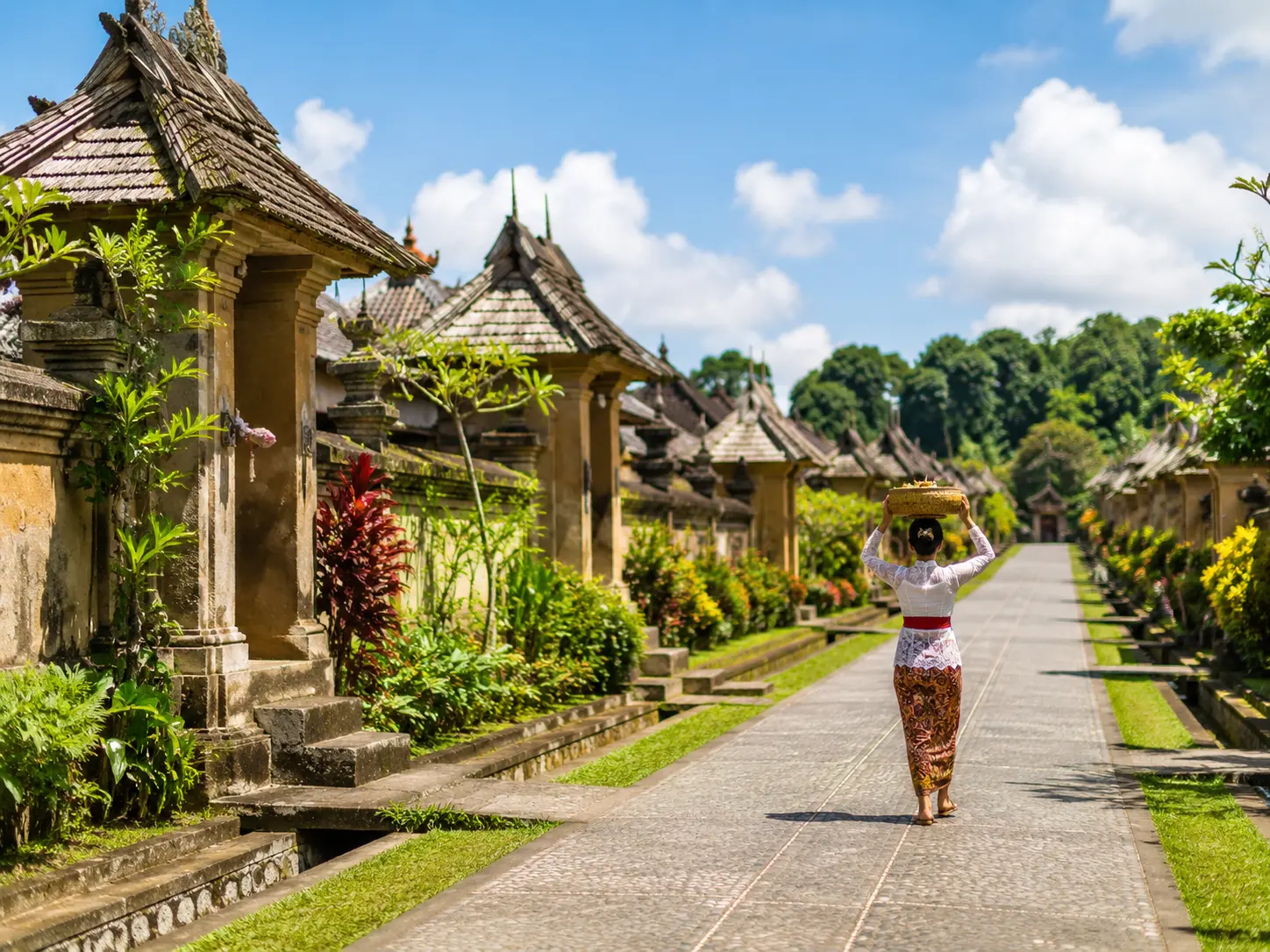
PENGLIPURAN VILLAGE
Explore This Guide
Choose a topic to jump to the information you need.
PENGLIPURAN VILLAGE
Booking Options
Start with personal local help, or compare online platforms.
Online bookings are handled by the selected platform. Personal assistance is provided separately by Best Bali Adventures.
What to Know Before Visiting Penglipuran Village
Visit Penglipuran as a living traditional village, not as a staged theme park. The main street and traditional gateways are the most recognisable part of the visit, but the value of the experience comes from understanding how the village layout, household compounds, community rules and bamboo landscape fit together.
Allow enough time to walk slowly, look beyond the central photo spots and respect the difference between public visitor areas and residents’ private spaces.
Penglipuran Village Quick Facts
| Practical detail | What to expect |
|---|---|
| Location | Kubu area, Bangli Regency, in Bali’s central highlands. |
| Suggested visit time | Around 1–2 hours for the village and bamboo forest; allow longer if you join an activity or spend time in resident compounds. |
| Current foreign admission | IDR 50,000 per adult and IDR 30,000 per child, based on the village’s published rates. Confirm before travel. |
| Current domestic admission | IDR 25,000 per adult and IDR 15,000 per child, based on the village’s published rates. Confirm before travel. |
| Published opening hours | 08:00–18:30 daily on the village’s current website. Check again before a late-afternoon visit. |
| Main experience | Traditional village layout, household compounds, cultural context and bamboo forest. |
| Walking | The central village is explored on foot; some surfaces, steps and side areas are less even. |
| Best approach | Arrive earlier if you prefer a quieter walk and easier photography. |
Is Penglipuran Village Worth Visiting?
Yes, if you are interested in Balinese village planning, traditional architecture and living culture. It is less compelling if your main goal is only a quick photo stop and you are not interested in the context behind what you see.
Penglipuran works especially well as a cultural stop because the village remains a real community. That also means visitors should avoid treating every doorway, courtyard or ceremony as unrestricted tourist access.
| Your priority | How Penglipuran fits |
|---|---|
| Traditional Bali culture | A strong choice when you want to see a preserved village layout and learn how community traditions shape daily life. |
| Architecture and photography | The central street and repeated angkul-angkul gateways are visually distinctive, especially when the village is less crowded. |
| A very short stop | Possible, but you will miss much of the value if you only walk the main street and leave. |
| A packed sightseeing day | Keep the number of additional stops realistic; Penglipuran is better when you are not watching the clock every few minutes. |
Understanding the Village Layout & Culture
Penglipuran is organised around a traditional spatial system rather than a random collection of old houses. The village is commonly explained through the Tri Mandala concept, separating sacred, residential and lower-use areas.
The central settlement follows a strong linear arrangement, with traditional gateways and household compounds facing the village street. The visual consistency is one reason Penglipuran is easy to recognise, but the layout also reflects community rules and inherited cultural organisation.
UN Tourism selected Penglipuran as one of its Best Tourism Villages 2023, recognising the village’s work in preserving local values, cultural heritage and a community-based tourism model.
Traditional Houses & Household Compounds
Some resident compounds welcome visitors into designated areas, but they remain family homes. Look for clear signs or an invitation before entering and follow the household’s instructions.
The repeated traditional gateways create a uniform streetscape, while the compounds behind them are working domestic spaces. Some residents sell food, drinks, handicrafts or offer cultural activities, so the experience can vary from house to house.
Photography of architecture is generally straightforward in public areas. Ask before photographing people closely or treating a private household activity as a photo opportunity.
Penglipuran Bamboo Forest
The bamboo forest is part of the wider Penglipuran cultural landscape, not a separate unrelated attraction. Indonesia’s tourism ministry profile describes about 45 hectares of bamboo forest within a wider 112-hectare village area.
The forest provides a quieter contrast to the formal central street. Paths can be damp or uneven after rain, so suitable footwear is more useful than trying to dress only for photographs.
Bamboo also has practical and ceremonial importance in village life, including construction, handicrafts and ritual use. Treat the forest as part of the community environment rather than simply a scenic backdrop.
Entrance Fees & What You Pay For
The village’s current published admission is IDR 50,000 per foreign adult and IDR 30,000 per foreign child. Published domestic rates are IDR 25,000 per adult and IDR 15,000 per child.
These are the village’s published rates at the time of this guide update, not a guarantee that the categories or prices will never change. Confirm the current price before relying on an older screenshot or tour description.
If you book an organised tour, check whether Penglipuran admission is already included. Do not assume that a transport-only booking includes entrance fees.
Should You Book a Ticket, Tour or Driver?
Choose the booking route based on what you actually need. Penglipuran can be visited independently, so you do not need to buy a full tour simply to enter the village.
| Option | Best when |
|---|---|
| Admission on arrival | You already have transport and are comfortable exploring independently. |
| Private driver | You want flexible transport and perhaps one or two additional stops, but do not need a packaged guided tour. |
| Organised tour | You want a guide, included transport, a pre-arranged itinerary or several attractions combined in one booking. |
| Local booking assistance | You want help deciding which option fits your hotel location, group, timing and other planned stops. |
For private transport only, use BestBaliDrivers.com. The dedicated full booking comparison for Penglipuran remains at the bottom of this guide in Booking & Local Assistance.
Planning Your Visit
Opening Hours & Best Time of Day
The village’s current website publishes daily opening hours of 08:00–18:30. Hours can change for operational or ceremonial reasons, so check again if you plan to arrive close to opening or late in the afternoon.
Morning is usually the simplest time if you want cooler conditions, fewer people and more room for photography. Later in the day can still work, but do not make the final hour your only opportunity to visit.
Weather
Bangli’s higher inland setting can feel cooler than Bali’s southern coast, and rain can make stone paths and forest areas slippery. Carry light rain protection during unsettled weather and slow down on wet surfaces.
Getting to Penglipuran Village
Penglipuran is inland in Bangli Regency, so plan both the outward and return journey. It is not a walkable add-on from Bali’s main beach resorts.
From Ubud, the drive is commonly around 45–60 minutes in ordinary conditions. From Denpasar and many southern areas, allow roughly 1.5–2 hours depending on your exact starting point and traffic.
For a private driver and return transport, visit BestBaliDrivers.com. Confirm pickup location, total vehicle hours, waiting time, child-seat needs and whether entrance tickets are separate before booking.
What Can You Combine With Penglipuran?
Choose stops that fit the same general inland route instead of building an overloaded Bali checklist. One or two well-matched additions usually make a better day than trying to include every attraction between Ubud and East Bali.
| Possible addition | Why it can fit |
|---|---|
| Besakih Great Temple | A strong cultural pairing when you want a village and a major temple complex in the same broader inland journey. |
| Kintamani / Mount Batur viewpoint | Useful when the highland route and your starting point make sense together. |
| Tegalalang Rice Terrace | Works better when your route passes through the Ubud side rather than as a forced detour. |
| One waterfall | Choose a specific waterfall and check the extra walking and driving before adding it. |
For curated private-day combinations, use BestBaliDayTours.com rather than assuming every nearby map pin belongs in one itinerary.
Visitor Etiquette & Photography
Remember that Penglipuran is a living community. Public access to the village does not make every home, shrine, ceremony or resident part of a tourist display.
- Ask before entering. Go into resident compounds only where visitors are clearly welcomed.
- Ask before close-up portraits. Do not photograph residents at close range without permission.
- Respect ceremonies. Give processions, offerings and worship space even when they create an interesting photograph.
- Keep pathways clear. Do not block household entrances or the main street for long photo sessions.
- Do not move offerings or objects. Leave religious and household items where they are.
Modest, comfortable clothing is sensible for a cultural village visit, especially if you may enter a temple area or observe religious activity.
Children & Accessibility
Penglipuran can work well for families because the main visit is a walk rather than an activity requiring special skills. Keep children close around steps, private compounds, offerings and busier visitor areas.
The central street is relatively straightforward to explore on foot, but side paths, household entrances and the bamboo forest can involve uneven surfaces, gradients or steps. A stroller may work for part of the visit but should not be assumed practical everywhere.
Visitors with limited mobility should decide in advance whether their priority is the main street only or a longer route including household compounds and the forest. Ask your driver or booking provider about the most practical drop-off and walking plan for your group.
Facilities & What to Bring
Basic visitor facilities are available around the tourism area. Indonesia’s tourism ministry profile lists parking, public toilets, food outlets, souvenir stalls, ATMs and other visitor facilities.
- Water: useful for the village walk and forest, especially on warm days.
- Rain protection: carry a compact umbrella or light rain layer in unsettled weather.
- Secure footwear: more useful than slippery sandals if you plan to walk into the forest.
- Small cash: useful for local food, drinks, crafts and smaller purchases even when some vendors accept digital payment.
- Sun protection: parts of the village are exposed despite the cooler highland setting.
Frequently Asked Questions
Can You Visit Penglipuran Without a Guide?
Yes. Many visitors explore independently. A guide becomes more useful when you want detailed cultural explanation rather than simply seeing the village layout.
Is the Bamboo Forest Part of Penglipuran?
Yes. The bamboo forest is part of the wider Penglipuran landscape and cultural environment.
Can You Go Inside the Traditional Houses?
Selected resident compounds welcome visitors into designated areas. Follow signs and the household’s instructions. An open gate does not automatically make the whole property public.
Is Penglipuran Suitable for Children?
Yes. It can be an easy cultural attraction for families. Children should still be supervised around steps, offerings, traditional buildings and private household areas.
What Happens if It Rains?
A visit is often still possible in light rain. Bring an umbrella or light rain jacket and take extra care on wet stone surfaces and pathways.
Should You Book Penglipuran or Just Hire a Driver?
If you only need transport, a private driver is usually sufficient and you can buy admission separately. Choose a tour or local booking assistance when you want the visit organised together with tickets, guidance or other attractions.
Related Experiences
These guides help you compare different cultural experiences. They are not a suggestion to fit every stop into the same day.
Compare Penglipuran’s village setting with Bali’s major Mother Temple complex when you want a deeper cultural day.
A landscape-focused alternative or addition when your route passes through the Ubud and Tegalalang area.
Explore Balinese storytelling through performance when you want a different kind of cultural experience.
Final Advice
Go to Penglipuran for the village itself, not just the famous central-street photograph. Allow enough time to understand the layout, enter only the household areas where visitors are welcomed and include the bamboo forest if your walking time allows.
If your day already includes several distant attractions, remove one rather than rushing through Penglipuran. A slower cultural visit usually makes more sense here.
Explore the Best Bali 4 U Network
Continue with these connected resources when you need broader Bali information or help planning the rest of your visit.
Booking & Local Assistance
For current Penglipuran Village ticket and tour options, use the dedicated booking page on BestBaliActivities.com, or contact Best Bali Adventures for personalised local help with your visit and transport.
Questions About This Guide?
Have you noticed information that needs correcting or updating? Contact the editorial team with questions about this guide, reliable local knowledge or suggestions that could help other visitors.